Ecommerce SEO Packages: What They Include
What ecommerce SEO packages typically include at each price point. One-time vs ongoing, deliverables to expect, and red flags in package offerings.
Why ecommerce SEO is sold in packages
SEO agencies and consultants sell packages for a practical reason: ecommerce SEO involves many moving parts that need to work together. Technical fixes alone will not drive revenue. Content without proper on-page optimization will not rank. Link building on a technically broken site is a waste of money. Packages bundle these interconnected services so they are executed in the right order with the right balance.
The downside of packages is that they can be opaque. A package labeled 'Premium Ecommerce SEO Plan' at $5,000 per month could mean almost anything. Some agencies use packages as a way to standardize and streamline their work, which benefits you. Others use them to mask what they are actually doing, which does not.
This guide breaks down what ecommerce SEO packages typically include, what each component is worth, and how to tell a legitimate offering from a bad deal. We sell packages ourselves, so we know the economics from the inside. For a detailed breakdown of costs at each tier, see our guide to ecommerce SEO pricing.
One-time packages vs ongoing retainers
Ecommerce SEO service packages generally fall into two categories: one-time projects and ongoing monthly retainers.
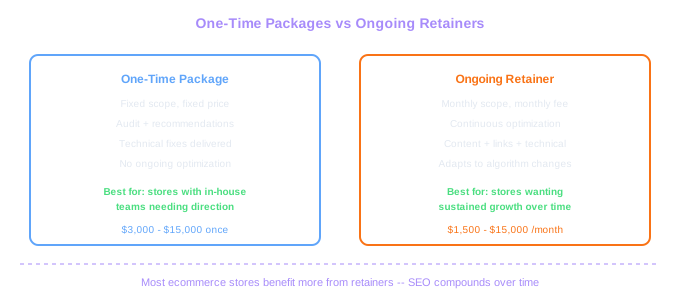
One-time packages cover a specific scope of work with a defined start and end date. The most common one-time package is an SEO audit. You pay a fixed fee (typically $2,000 to $10,000 depending on store size and depth), receive a deliverable (the audit report with recommendations), and the engagement ends. Other one-time packages include site migration support, initial technical optimization, and content strategy development.
One-time packages make sense when you have internal resources to implement recommendations but need expert direction. If your team can execute the work but does not know what to prioritize, an audit package gives you the roadmap.
Ongoing retainers cover continuous work month after month. This is where most ecommerce SEO results come from, because SEO is not a one-time fix. Rankings need monitoring, new content needs publishing, technical issues pop up with every platform update, and link building requires sustained effort. Monthly retainers for ecommerce range from $1,500 to $15,000 depending on the scope and the agency.
In our experience, stores that treat SEO as a project (do it once and move on) see results plateau or decline within 6 to 12 months. Stores that invest in ongoing retainers see compounding returns because organic traffic builds on itself over time. For help deciding which package fits your goals, review our ecommerce SEO strategy guide.
What entry-level packages include ($1,500 to $3,000 per month)
At this price point, you are getting a focused scope of work. The agency or consultant cannot cover everything, so they prioritize the highest-impact areas.
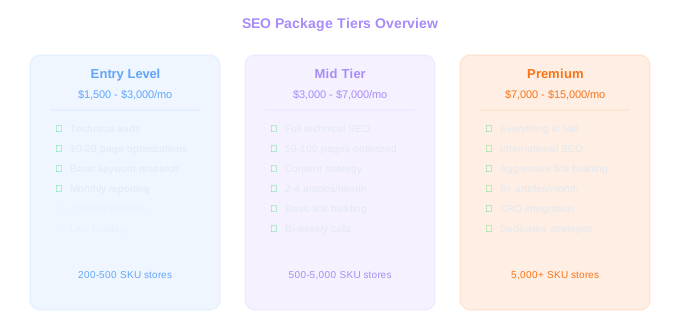
A typical entry-level ecommerce SEO package includes a basic technical audit and fixes (crawl errors, indexation issues, sitemap cleanup), on-page optimization for 10 to 20 pages per month (usually your most important category pages), keyword research and mapping for target pages, monthly reporting with traffic and ranking data, and basic monitoring of technical health.
What you will not get at this level: content creation, link building, or deep technical work like server configuration changes or custom structured data implementation. If the package claims to include all of those things at $1,500 per month, the quality of each will be thin.
Entry-level packages work best for smaller stores with fewer than 2,000 products that already have a reasonably solid technical foundation. If your site has serious technical debt, you need a larger initial investment to fix the foundation before ongoing optimization makes sense.
Expect to see measurable progress in 4 to 6 months. Within the first year, a well-executed entry-level package should deliver 20 to 40% growth in organic traffic to optimized pages. That is a realistic expectation for this investment level.
What mid-tier packages include ($3,000 to $7,000 per month)
This is the most common price range for serious ecommerce SEO work. At this level, the scope expands to cover most aspects of SEO with meaningful depth.
Mid-tier ecommerce SEO plans typically include a full technical SEO audit with implementation (not just recommendations), on-page optimization for 30 to 50 pages per month, content strategy and creation (2 to 4 pieces of content per month such as buying guides, category descriptions, or blog posts), link building (5 to 15 quality backlinks per month through outreach), monthly reporting with revenue attribution, regular strategy calls (biweekly or monthly), and conversion rate optimization recommendations.
The inclusion of content and link building is what separates mid-tier from entry-level. These two activities drive the most long-term growth but require significant time and expertise. A single well-researched buying guide can take 8 to 12 hours to produce. Link building outreach for ecommerce requires personalized emails to relevant sites, which is labor-intensive.
At this price point, you should expect dedicated account management. You should have a specific person you can reach with questions and who knows your account inside and out. If you are being shuffled between different people every month, the agency is spreading itself too thin.
Results expectations: within 12 months, a mid-tier package for a store with 2,000 to 20,000 products should deliver 40 to 80% growth in organic traffic and a noticeable increase in organic revenue. We have seen clients at this investment level go from $30,000 to $65,000 per month in organic revenue within a year.
Mid-Tier Sweet Spot
The $3K-$7K/month range is where meaningful ecommerce SEO happens. Clients at this level have gone from $30,000 to $65,000/month in organic revenue within a year -- a clear ROI on the investment.
What premium packages include ($7,000 to $15,000 per month)
Premium packages are for established ecommerce businesses with large catalogs, international presence, or aggressive growth targets. The work is deep, strategic, and often involves coordination with your development and marketing teams.
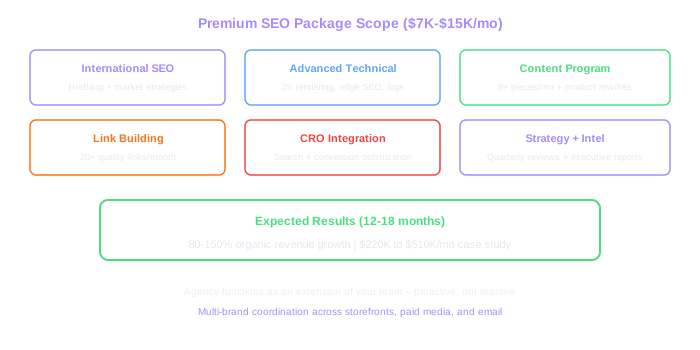
Beyond everything in the mid-tier, premium ecommerce SEO packages typically add international SEO (hreflang implementation, market-specific keyword strategies), advanced technical SEO (JavaScript rendering optimization, edge SEO, log file analysis), large-scale content programs (8 or more pieces per month plus product description rewrites), aggressive link building campaigns (20 or more quality links per month), CRO integration (optimizing pages for both search engines and conversions), competitive intelligence and market analysis, and quarterly strategy reviews with executive reporting.
At this level, the agency should function as an extension of your marketing team. They should be proactive, not reactive. They should bring you opportunities you did not ask about and catch problems before you notice them.
We run premium packages for several multi-brand ecommerce companies. The work involves coordinating across multiple storefronts, managing different SEO strategies for different brands, and aligning with their paid media and email marketing teams. This level of integration requires senior-level talent, which is reflected in the cost.
Results expectations: within 12 to 18 months, premium packages should deliver significant organic revenue growth, often 80 to 150%. For one client operating five storefronts, organic revenue grew from $220,000 to $510,000 per month over 14 months. That kind of return justifies the investment many times over.
Premium ROI
One client operating five storefronts saw organic revenue grow from $220,000 to $510,000 per month over 14 months with a premium package. The agency coordinated across multiple brands, paid media, and email teams.
What deliverables to expect and what to demand
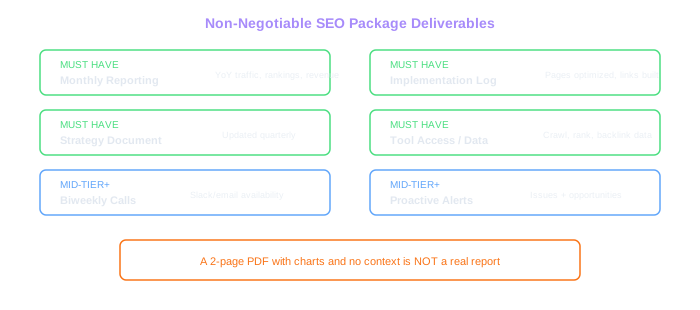
Regardless of which tier you choose, certain deliverables should be non-negotiable in any ecommerce SEO package.
Monthly reporting is the minimum. The report should show organic traffic trends (year-over-year, not just month-over-month), keyword ranking changes for tracked terms, organic revenue and conversion data, work completed during the reporting period, and a plan for the next month. If an agency sends you a two-page PDF with a few charts and no context, that is not a real report.
An implementation log or task tracker should be maintained. You need to see exactly what work was done each month. How many pages were optimized? Which links were built and from which sites? What content was published? Without this transparency, you cannot evaluate whether the package is delivering what was promised.
Strategy documentation should be provided at the start of the engagement and updated quarterly. This is the plan that guides all execution. It should outline target keywords, priority pages, content topics, link building targets, and technical improvements to make. If you do not have a documented strategy, you are paying for activity without direction.
Access to tools and data should be included. Your agency should give you access to or reports from the tools they use, including crawl data, rank tracking, and backlink monitoring. You should be able to verify their work independently if you choose to.
Regular communication beyond monthly reports is expected at mid-tier and above. Biweekly calls, Slack or email availability for questions, and proactive alerts about issues or opportunities should all be part of the service.
Demand Transparency
Every SEO package should include monthly reporting with YoY data, an implementation log showing exactly what was done, a strategy document updated quarterly, and access to the tools and data behind the work.
How to compare packages across agencies
When you have proposals from multiple agencies, comparing them requires looking beyond the headline price.
First, compare the scope of work in detail. Count the number of pages being optimized monthly, content pieces being created, links being built, and hours being allocated. An agency charging $5,000 per month for 20 hours of work and another charging $4,000 for 30 hours are not equivalent even though the prices are similar. The $4,000 option may deliver more value.
Look at who will do the work. Junior team members or offshore contractors doing the execution is not inherently bad, but you should know. If you are paying premium rates, you should expect senior-level involvement in strategy and quality control. Ask specifically: who will write the content? Who will do the technical SEO work? Who will run link building outreach?
Check the contract terms. Month-to-month contracts favor you because the agency has to earn your continued business. Agencies that require 12-month commitments upfront are shifting risk from themselves to you. Some initial commitment (3 months) is reasonable because SEO results take time. A year-long lock-in with no performance benchmarks is not.
Ask about what happens when something goes wrong. If a Google algorithm update tanks your traffic, what is the agency's response plan? If a technical issue breaks indexation, how quickly do they respond? The best agencies have incident response processes and do not charge extra for emergency support.
Finally, ask about exclusivity. Some agencies refuse to work with competing businesses in the same niche. Others will happily take your money and your competitor's money simultaneously. Know what you are getting into. Before committing, consider requesting a standalone SEO audit so you have an independent baseline to measure progress against.
Red flags in package offerings
Some package structures should make you immediately skeptical.
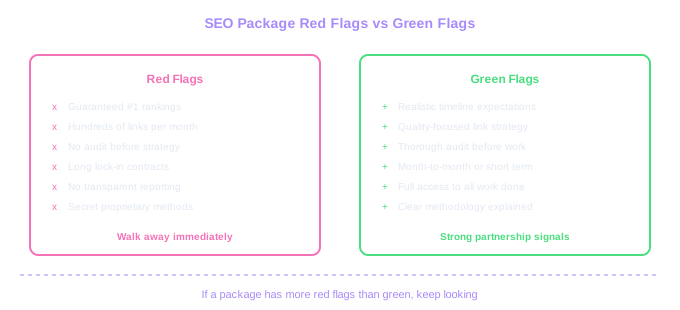
Packages that promise a specific number of rankings ('We will get you 50 first-page rankings') are selling something they cannot guarantee. Rankings depend on too many factors outside anyone's control. A legitimate package promises specific work and activities, not specific outcomes.
Packages with vague deliverables like 'ongoing optimization' or 'monthly SEO improvements' without specifying what those include are a way to minimize accountability. You should know exactly what work is being done each month.
Extremely cheap packages for large stores are a warning sign. If an agency offers to do full-service SEO for a 50,000-product store at $999 per month, the math does not work. Either they are using automated tools with no human oversight, outsourcing to the cheapest labor they can find, or they plan to upsell you constantly once you sign.
Packages that do not include reporting or limit your access to data are hiding something. If you cannot see what is happening with your own website's SEO, you have no way to hold the agency accountable.
Watch out for packages that lock you into proprietary tools or platforms. Some agencies build your SEO workflow on their own systems, which means you lose everything if you leave. Your content, your data, and your work product should belong to you. Period.
Packages that include link building but refuse to disclose the sources are a major red flag. You need to know where your backlinks come from. If the agency is building links from spammy or irrelevant sites, it could result in a Google penalty that damages your store for years. To compare how leading providers structure their offerings, read our roundup of ecommerce SEO agencies.