Link Building
11 min readBacklink Fundamentals for Ecommerce
Backlinks remain one of the strongest ranking signals Google uses to evaluate online stores. Each link from another website acts as a vote of confidence, telling search engines that your store offers something worth referencing. Understanding how backlinks work, and which ones actually move the needle for ecommerce, is the foundation for every [link building](/link-building) strategy covered in this cluster.
In this guide
- 1. Why Backlinks Matter for Online Stores
- 2. What Makes a Backlink Valuable
- 3. Types of Backlinks Ecommerce Stores Earn
- 4. How Google Evaluates Link Quality
- 5. Building a Link-Worthy Ecommerce Site
- 6. Avoiding Link Building Penalties
- 7. anchorMismatchDemotion and sourceType: Hidden Link-Quality Signals From the Leak
Why Backlinks Matter for Online Stores
Google treats backlinks as third-party endorsements. When a reputable website links to your product page, category page, or blog post, Google interprets that as a signal that your content is trustworthy and useful. For ecommerce stores competing in crowded markets, backlinks often determine who ranks on page one versus who sits on page three.
The connection between backlinks and rankings is well documented. Pages in the top three organic positions have, on average, three to five times more referring domains than pages ranking in positions seven through ten. For product and category pages, which are inherently harder to earn links to, even a handful of quality backlinks can create a significant ranking advantage over competitors with zero external links.
Backlinks also accelerate crawling and indexing. Google discovers new pages by following links across the web. If your new product page earns a link from a well-crawled blog or news site, Googlebot will find and index that page faster than if it relied solely on your XML sitemap. For stores launching new products or seasonal collections, this speed advantage translates directly into earlier visibility and sales.
What Makes a Backlink Valuable
Not all backlinks carry equal weight. Google evaluates links based on several factors, and understanding these helps you prioritize which links to pursue. The first factor is relevance. A link from a fitness equipment review site to your yoga mat product page is far more valuable than a link from a random cooking blog. Google uses the linking page's content, the anchor text, and the surrounding context to gauge topical relevance.
The second factor is the authority of the linking domain. A link from a well-established publication like a national newspaper or a major industry blog carries more weight than a link from a brand-new personal site with no traffic. Domain authority, while not a Google metric itself, is a useful proxy. Tools like Ahrefs, Moz, and Semrush each calculate their own version of this score.
The third factor is link placement. A link embedded naturally within the body of an article passes more value than a link buried in a footer, sidebar, or author bio. Google's algorithms can distinguish between editorial links that the author deliberately included and boilerplate links that appear on every page of a site. Links higher up in the main content area tend to pass more authority.
Finally, the dofollow versus nofollow attribute matters. Dofollow links pass full ranking value by default. Nofollow links, and the newer ugc and sponsored attributes, tell Google that the link should not pass authority. While nofollow links can still drive referral traffic, dofollow links from relevant, authoritative sites are the primary targets for SEO-driven link building.
Quality Over Quantity
One relevant DR 70+ editorial link can outweigh dozens of low-quality directory links. Pages in positions 1-3 average 3.5x more referring domains than pages in positions 7-10.
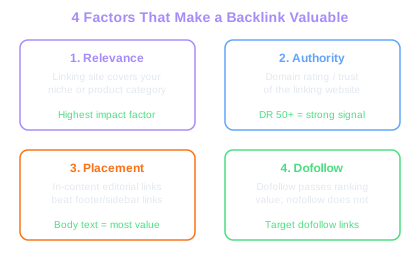
When evaluating a potential backlink, check three things in order: topical relevance to your products, the linking domain's authority score, and whether the link will be dofollow and placed within the main content. A link that scores well on all three is worth ten links that only meet one criterion.
Types of Backlinks Ecommerce Stores Earn
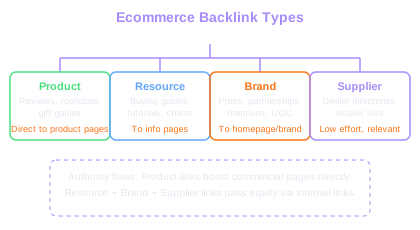
Ecommerce stores can earn backlinks through several distinct patterns. Product links occur when bloggers, reviewers, or journalists reference your products in articles, roundups, or gift guides. These are among the most valuable links because they point directly to commercial pages with purchasing intent.
Resource links happen when your store publishes helpful content, buying guides, sizing charts, maintenance tutorials, that other sites reference as a source. A well-researched guide on choosing running shoes might earn links from fitness blogs, running forums, and shoe comparison sites. These links typically point to informational pages, but the authority flows through internal links to your product pages.
Brand mention links are earned when someone writes about your brand and includes a link. This can happen in press coverage, partner announcements, sponsorship mentions, or user-generated content. Monitoring unlinked brand mentions and requesting the addition of a hyperlink is one of the easiest link building tactics for established stores. Learn how to study what your rivals are earning in competitor backlink analysis.
Supplier and manufacturer links come from the brands you carry. Many manufacturers maintain dealer directories or authorized retailer lists on their websites. Ensuring your store is listed with a link on every manufacturer site you work with provides a steady stream of relevant, authoritative backlinks that require minimal ongoing effort.
Easy Win
Check every manufacturer and supplier you stock for dealer directories or authorized retailer pages. These links are highly relevant, often DR 50+, and require only a listing request to secure.
How Google Evaluates Link Quality
Google's link evaluation has evolved considerably since the early days of PageRank. The algorithm now considers the full context surrounding a link, not just the raw count of linking domains. A single link from a highly relevant, authoritative page within a well-structured article can outweigh dozens of links from low-quality directories or blog comment sections.
Anchor text, the clickable text of a link, provides Google with a strong signal about the linked page's topic. Natural backlink profiles show diverse anchor text: branded anchors (your store name), generic anchors ("click here", "this site"), naked URLs, and occasionally keyword-rich anchors. If a large percentage of your backlinks use exact-match keyword anchors, Google may view this as manipulative and discount or penalize those links.
Google also evaluates link velocity, the rate at which a site acquires new backlinks over time. A natural profile shows steady, organic growth with occasional spikes around product launches, sales events, or viral content. A sudden jump from ten referring domains to five hundred in a single week without a corresponding event raises red flags.
Link neighborhoods matter too. If the sites linking to you also link to spammy or low-quality websites, the value of those links diminishes. Conversely, if your backlink profile shares referring domains with respected competitors in your niche, Google views your site more favorably.
Run a monthly backlink audit using Ahrefs or Google Search Console. Look for sudden spikes in low-quality links, over-optimized anchor text, or links from irrelevant niches. Disavowing toxic links before they accumulate prevents potential ranking penalties.
Building a Link-Worthy Ecommerce Site
Before pursuing active link building, ensure your store has pages worth linking to. Most product pages on most stores are not inherently link-worthy, they look identical to the same product on ten other retailers. To earn links, you need to create differentiated assets.
Original research is one of the strongest link magnets. Strategies like digital PR for ecommerce can amplify data-driven content into dozens of high-authority links. Survey your customers about buying preferences, analyze your sales data for industry trends, or compile pricing data across your category. A well-presented data study, even a simple one, can earn links from industry blogs, news outlets, and academic resources that would never link to a standard product page.
Comprehensive buying guides that go beyond surface-level advice also attract links. A 3,000-word guide on choosing the right office chair that covers ergonomic principles, material comparisons, weight capacity considerations, and maintenance tips becomes a reference that other content creators want to cite.
Interactive tools, size calculators, product finders, compatibility checkers, earn links because they provide unique utility that cannot be replicated in a simple text article. A carpet retailer that builds a room size calculator will earn links from interior design blogs, home improvement forums, and real estate sites.
Avoiding Link Building Penalties
Google's Penguin algorithm specifically targets manipulative link building. Understanding what triggers penalties helps you build a sustainable backlink profile. Paid links without proper disclosure violate Google's guidelines. If you pay for a link, it must carry a sponsored or nofollow attribute. Undisclosed paid links risk a manual action that can tank your rankings overnight.
Private blog networks (PBNs), networks of sites created solely to manipulate rankings through interlinked pages, are a well-known penalty trigger. Google has become increasingly effective at detecting PBN footprints, and the temporary ranking boost they provide is rarely worth the risk of a domain-wide penalty.
Excessive link exchanges ("I'll link to you if you link to me") also raise flags when done at scale. While natural reciprocal linking between genuinely related businesses is fine, systematic exchanges with dozens of unrelated sites look artificial.
The safest approach is to focus on earning links through genuinely useful content, real business relationships, and newsworthy activities. These links are sustainable because they reflect real value your store provides. Our off-page SEO for ecommerce guide covers how to build a penalty-proof backlink profile. When Google updates its algorithms, and it does regularly, earned links retain their value while manipulative links get devalued or penalized.
Free Tools & Resources
Try our free SEO tools
Work Together With SEO Experts who understand ecommerce
World’s first Ecom-founded SEO agency