Advanced SEO
11 min readProgrammatic SEO for Ecommerce
Programmatic SEO uses templates and structured data to generate large numbers of search-optimized pages at scale. For ecommerce stores with extensive product catalogs, this approach can capture thousands of long-tail queries that would be impossible to target manually, but it also carries real risks around thin content and index bloat. Mastering these [advanced ecommerce SEO techniques](/blog/advanced-ecommerce-seo-techniques) is essential before deploying at scale.
In this guide
How Programmatic SEO Works in Ecommerce
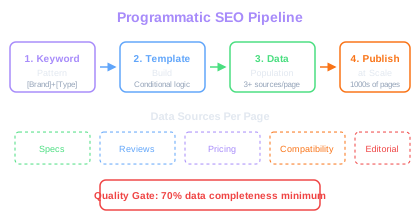
Programmatic SEO follows a repeatable formula: identify a scalable keyword pattern, build a page template, populate it with unique data, and publish at volume. In ecommerce, common programmatic patterns include "[Brand] + [Product Type] + [Color/Size]" pages, location-based product availability pages, and comparison pages that pair competing products.
The fundamental requirement is unique, valuable data that populates each page. A page template without genuinely different content across instances is just duplicate content with swapped keywords. Google's helpful content system specifically targets this pattern, and mass-produced pages with minimal variation will be filtered or demoted.
Successful ecommerce programmatic SEO relies on combining multiple data sources per page: product specifications, customer reviews, pricing history, compatibility information, and editorial content. Each page should answer a specific query better than any existing result. If your programmatic page offers less information than a standard category page from a competitor, it adds no value.
The scale advantage is real: a hardware store generating pages for every "[Tool Brand] + [Tool Type] + review" combination can capture thousands of purchase-intent queries. But the approach demands rigorous quality controls to prevent thin pages from dragging down overall site quality.
Scale vs. Quality
Google's March 2024 core update deindexed entire sites relying on auto-generated pages with minimal variation. Every programmatic page must answer its target query better than existing results.
Template Design and Content Differentiation
The template is the engine of programmatic SEO. A well-designed template produces pages that feel hand-crafted despite being auto-generated. This requires more than swapping variables into a fixed paragraph. Each section of the template should pull from different data sources and render differently based on the available data.
Build templates with conditional logic. If a product has customer reviews, display a review summary section. If comparison data exists, render a comparison table. If the product is discontinued, show alternative recommendations. Pages that display empty sections or placeholder text where data is missing signal low quality to both users and search engines.
Content differentiation goes beyond the main body text. Unique meta titles and descriptions using natural language variations (not just "[Product] - Buy [Product] Online"), unique FAQ sections drawn from actual customer questions, and unique internal linking patterns based on product relationships all contribute to differentiation.
Test your templates against Google's thin content criteria before launching at scale. Generate 50 sample pages and evaluate whether each genuinely answers the target query with information a user cannot easily find elsewhere. If more than 20% of your sample pages feel thin, revise the template or narrow the keyword pattern to focus on queries where you have richer data.
Add a data completeness threshold to your page generation pipeline. Only publish pages where at least 70% of template sections have real data. Pages below this threshold should be blocked from indexing until data is enriched.
Index Management at Scale
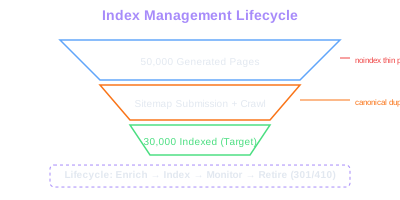
Generating 50,000 programmatic pages means nothing if 40,000 of them sit unindexed or get caught in a quality filter. Index management is the operational challenge that separates successful programmatic SEO from wasted engineering effort.
Start with a crawl-first strategy. Submit programmatic pages through XML sitemaps organized by category or template type. Monitor the Index Coverage report in Google Search Console to track indexing rates by sitemap. Understanding crawl budget management is critical when publishing pages at this volume. If a specific template category shows low indexing rates, that template likely has quality issues that need addressing.
Use the robots meta tag and canonical tags strategically. Pages with insufficient data should carry a noindex tag until enriched. Near-duplicate pages (like the same product in slightly different configurations) should use canonical tags pointing to the primary variant. Never rely on robots.txt to manage indexation of programmatic pages, as it blocks crawling but does not remove pages from the index.
Implement a lifecycle management system for programmatic pages. When products go out of stock permanently, the corresponding programmatic pages should either redirect to alternatives, update to show discontinuation information, or be removed with proper 410 status codes. Stale programmatic pages with outdated pricing or availability data erode user trust and quality signals.
Indexing Funnel
Generating 50,000 pages means nothing if 40,000 sit unindexed. Segment sitemaps by template type and monitor indexing rates per category in Search Console to catch quality issues early.
Avoiding Thin Content Penalties
Google's March 2024 core update specifically targeted low-quality programmatic content, deindexing entire sites that relied on auto-generated pages with minimal value. Understanding the line between valuable programmatic content and spam is critical for long-term viability.
Thin content in programmatic SEO typically manifests as pages where the template text dominates and the variable data adds minimal information. A page titled "Best Red Running Shoes for Women" that contains the same generic paragraphs as "Best Blue Running Shoes for Women" with only color swaps provides no incremental value. Google's systems can detect these patterns at scale.
Enrich programmatic pages with content that cannot be easily templated: curated product recommendations based on purchase data, aggregated customer sentiment from reviews, real pricing comparisons with competitors, and editorial expert opinions. The harder the content is to replicate across pages, the more defensible each page becomes.
Monitor quality signals at the template level, not just the page level. Track average time on page, bounce rate, and pogo-sticking rates for each template type. If users consistently return to search results after visiting a specific template pattern, that template needs reworking. Google's user satisfaction signals will eventually catch up to poor-performing templates.
Set up automated quality monitoring that flags programmatic pages with below-average engagement metrics. Review flagged pages weekly and either enrich them with additional data or remove them from the index.
Internal Linking for Programmatic Pages
Programmatic pages need structured internal linking to distribute authority and help search engines understand their relationship to the broader site. Without intentional linking architecture, programmatic pages become orphaned nodes that Google discovers slowly or ignores entirely.
Create hub pages that aggregate and link to groups of programmatic pages. A hub page for "Running Shoes by Brand" links to all brand-specific programmatic pages, while a hub for "Running Shoes by Feature" links to feature-specific pages. These hubs serve as crawl entry points and distribute link equity to child pages.
Implement contextual cross-linking between related programmatic pages. A page about "Nike Pegasus 40 Review" should link to comparison pages like "Nike Pegasus 40 vs. ASICS Gel-Nimbus 25" and category pages like "Best Cushioned Running Shoes." Use programmatic logic to generate these links based on shared attributes, product relationships, or user browsing patterns.
Avoid creating mega-footers or sidebar link blocks that list hundreds of programmatic pages. These patterns are recognized as link schemes and provide minimal crawl or ranking benefit. Instead, limit contextual links per page to 5-10 highly relevant programmatic siblings and rely on hub pages and XML sitemaps for broader discovery.
Measuring Programmatic SEO Performance
Performance measurement for programmatic SEO requires granularity that standard analytics setups do not provide. You need to evaluate template-level performance, not just aggregate traffic metrics, to understand which page patterns work and which need refinement.
Segment Search Console data by URL pattern to measure impressions, clicks, CTR, and average position per template type. A comparison template averaging position 15 with a 0.5% CTR tells you the template concept works but needs content improvement. A brand-specific template averaging position 45 with zero clicks suggests the entire pattern may be misguided.
Track indexing velocity per template category. New programmatic pages should appear in Google's index within 2-4 weeks if quality signals are strong. Templates with indexing rates below 50% after 60 days have fundamental quality or technical issues. Compare indexing rates across template types to identify which patterns Google values.
Build a revenue attribution model that connects programmatic page traffic to conversions. Programmatic pages often serve as discovery entry points rather than direct conversion pages, so last-click attribution underestimates their value. Use assisted conversion paths to understand how programmatic pages contribute to the overall purchase journey.
Free Tools & Resources
Try our free SEO tools
Work Together With SEO Experts who understand ecommerce
World’s first Ecom-founded SEO agency