Industry Playbooks
11 min readHealth & Beauty SEO Playbook
Health and beauty ecommerce sits at the intersection of science, regulation, and personal trust. Google classifies many health and beauty queries as YMYL (Your Money or Your Life), which means ranking requires higher standards of expertise and accuracy than most retail categories. This playbook covers the specific SEO strategies that drive organic growth for skincare, cosmetics, supplements, and wellness stores.
In this guide
Ingredient-Based Keyword Strategy
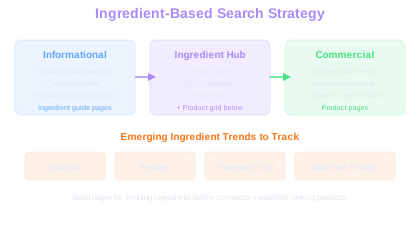
Beauty shoppers increasingly search by ingredient rather than brand or product type. Queries like "niacinamide serum," "retinol moisturizer," and "salicylic acid cleanser" carry strong commercial intent and often convert at higher rates than generic category searches. Build your keyword strategy around the active ingredients in your product line.
Create dedicated landing pages for each hero ingredient your products contain. A page targeting "hyaluronic acid products" should explain what the ingredient does, who it benefits, how to use it, and then show your relevant products. This structure satisfies both informational and transactional intent on a single page.
Map ingredient keywords to product pages as well. Each product page should prominently feature its key active ingredients in the title tag, H1, meta description, and body copy. A product titled "Vitamin C Brightening Serum" will outperform "Radiance Booster XR" for organic search because shoppers search by ingredient, not by brand-invented names.
Track emerging ingredient trends. Ingredients like bakuchiol, peptides, and tranexamic acid have seen rapid search growth. Monitor beauty publications, Reddit skincare communities, and Google Trends to spot rising ingredients before your competitors build dedicated pages.
Name Beats Brand
A product titled "Vitamin C Brightening Serum" outperforms "Radiance Booster XR" in organic search because shoppers search by ingredient, not brand-invented names. Include the active ingredient and its concentration in every product title.
YMYL Compliance and E-E-A-T Signals
Google holds health and beauty content to YMYL (Your Money or Your Life) standards. Pages that make health claims, recommend treatments, or discuss ingredients with physiological effects face heightened scrutiny. Weak E-E-A-T signals can prevent otherwise well-optimized pages from reaching page one.
Establish author credibility for all educational content. Blog posts about skincare routines, ingredient benefits, or product selection should list the author's qualifications, dermatologist, licensed esthetician, cosmetic chemist, or certified nutritionist. Link author names to dedicated bio pages that list credentials, professional affiliations, and publications.
Cite reputable sources when making claims about ingredients or benefits. Link to peer-reviewed studies, FDA guidelines, or recognized dermatological associations. A product page claiming "reduces wrinkles by 40%" without a cited clinical study will struggle to rank under YMYL evaluation.
Add a medical disclaimer to pages that discuss health-related topics. This does not directly improve rankings, but it signals responsible content practices to quality raters. Include a statement like "This content is for informational purposes and does not constitute medical advice. Consult a healthcare professional before starting any new supplement or skincare regimen."
YMYL Quality Bar
A product page claiming "reduces wrinkles by 40%" without a cited clinical study will struggle to rank under YMYL evaluation. Every health-related claim needs a link to peer-reviewed research or recognized medical guidelines.
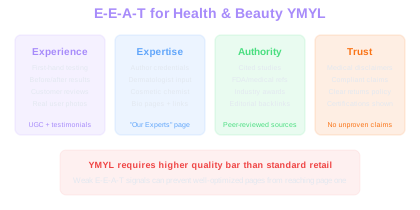
Create a dedicated "Our Experts" page listing every contributor to your educational content. Include headshots, credentials, and links to external profiles (LinkedIn, professional association memberships). This centralized credibility page strengthens E-E-A-T across your entire site.
Product Content and Claims Management
Health and beauty product pages require a careful balance between persuasion and compliance. Overblown claims trigger both regulatory issues and Google quality downgrades. Understated claims fail to convert. The solution is specificity backed by evidence.
Structure product descriptions around three pillars: what the product does, what ingredients drive those results, and what evidence supports the claims. Instead of "miracle anti-aging cream," write "This retinol night cream contains 0.5% encapsulated retinol, shown in clinical studies to reduce fine lines with continued use over 8-12 weeks."
Before/after imagery presents both an opportunity and a risk. Google has historically been cautious about before/after content in health contexts. If you use before/after photos, ensure they are genuine, unretouched, include proper disclaimers about individual results varying, and add alt text that describes the images factually rather than promotionally.
User-generated content, reviews, photos, and video testimonials, provides authentic social proof that strengthens both conversion rates and search rankings. Implement review schema markup (AggregateRating) so star ratings appear in search results. Respond to negative reviews professionally; an engaged review section signals trustworthiness to both shoppers and search quality evaluators.
Avoid using testimonials that make medical claims. A customer review stating "this cured my eczema" could create regulatory and SEO problems. Moderate reviews to flag and annotate health claims with appropriate context.
Content Strategy for Beauty and Wellness
Educational content drives a large share of organic traffic in health and beauty. Shoppers research routines, ingredient compatibility, application techniques, and product comparisons extensively before purchasing. A robust content strategy captures these researchers and guides them toward your products.
Build comprehensive routine guides for different skin types, concerns, and goals. "Morning Skincare Routine for Oily Skin" or "Beginner's Guide to Korean Skincare" target high-volume informational queries while naturally linking to your products at each routine step. Structure these guides with clear H2 headings for each step so Google can extract featured snippets.
Ingredient compatibility content performs exceptionally well. Articles like "Can You Use Vitamin C and Retinol Together?" or "Niacinamide and AHA: Safe to Layer?" answer specific questions that shoppers ask before mixing products from different brands. These pages attract backlinks from beauty forums and editorial roundups.
Video content has growing SEO value in beauty and is a key part of ecommerce SEO content strategy. Tutorial videos embedded on product pages increase time on page, reduce bounce rates, and can rank independently in YouTube and Google Video search. Create application tutorials, ingredient explainers, and routine demonstrations. Transcribe each video and include the transcript on the page for additional indexable text.
Publish a "Skincare Ingredient Glossary" covering every active ingredient in your product line. This single page can rank for dozens of informational queries and is an internal linking hub that connects to all your ingredient-specific product and category pages.
Influencer Content and SEO Integration
Influencer marketing is central to beauty ecommerce, but most influencer content generates zero SEO value. Instagram posts, TikTok videos, and YouTube shorts build brand awareness without contributing to your domain's search authority. Bridging influencer activity and SEO requires deliberate structural choices.
Negotiate blog-based content as part of influencer partnerships. A beauty blogger writing a detailed review on their own site with a dofollow link to your product page delivers lasting SEO value. Prioritize influencers with established blogs that carry genuine domain authority, check their domain rating and organic traffic before committing.
Repurpose influencer content on your own site with permission. If an influencer creates a video tutorial featuring your products, embed it on the relevant product page with a written summary. If they write a review, quote a key passage (with attribution) in your product description or a dedicated press/reviews section.
Create a dedicated influencer or ambassador landing page on your site. List your partners with headshots, bios, and links to their content. This page earns links from influencers who link to their own profile on your site, and it provides additional E-E-A-T signals by associating your brand with recognized voices in the beauty space.
Track which influencer collaborations generate organic search traffic versus social traffic. Over time, double down on partners whose content produces lasting search visibility rather than one-time social spikes.
Technical SEO for Large Beauty Catalogs
Beauty stores often carry hundreds or thousands of SKUs across overlapping categories, the same moisturizer might appear under "Face Care," "Anti-Aging," "Dry Skin," and "Night Creams." Without careful technical SEO, this creates widespread duplicate content and crawl inefficiency.
Use canonical tags to consolidate duplicate product listings. Each product should have one primary URL, and all secondary category placements should canonical back to it. If your moisturizer lives at /products/hydra-repair-cream, the listing under /anti-aging/hydra-repair-cream should carry a canonical tag pointing to the primary URL.
Implement robust faceted navigation controls. Beauty shoppers filter by skin type, concern, ingredient, price, and brand. Allow Google to index high-value facets (skin type + product type combinations like /serums/oily-skin) while blocking low-value permutations via robots.txt or meta noindex.
Product schema is especially valuable for beauty products. Include brand, SKU, price, availability, aggregate rating, and ingredient lists in your structured data. Google can surface this data in rich results, knowledge panels, and Shopping tabs. Test your schema regularly with Google's Rich Results Test tool.
Manage product discontinuations carefully. When a product is permanently discontinued, 301 redirect its URL to the closest successor product or the parent category page. Never leave discontinued product URLs returning 404 errors, they may carry backlinks and ranking history worth preserving.
Free Tools & Resources
Try our free SEO tools
Work Together With SEO Experts who understand ecommerce
World’s first Ecom-founded SEO agency