Search Fundamentals
9 min readIntroduction to Ecommerce SEO
Ecommerce SEO is a different discipline from optimizing a blog or a brochure website. Online stores deal with thousands of product pages, constantly rotating inventory, and complex site architectures that create unique challenges most SEO guides never address.
In this guide
What Makes Ecommerce SEO Different
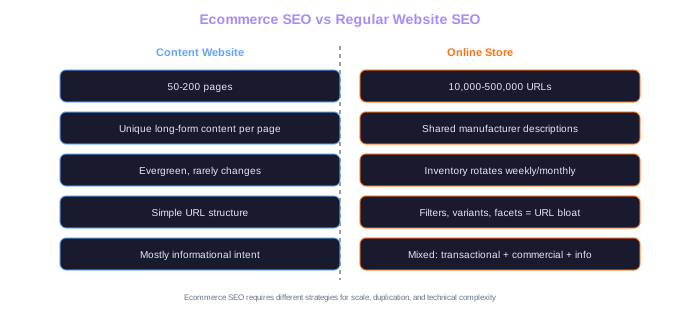
A typical content website might have 50 to 200 pages. An online store can easily have 10,000 to 500,000 URLs once you factor in product pages, category pages, filtered views, and variant combinations. That scale changes everything about how you approach search optimization.
Ecommerce sites also deal with content that shifts constantly. Products go out of stock, seasonal collections rotate in and out, prices change, and new SKUs get added weekly. Unlike a blog post that can rank for years without updates, product pages require ongoing attention to stay relevant and indexed.
Then there is the issue of thin content. Most product pages share manufacturer descriptions used by dozens of other retailers. A product page with a two-sentence description, a price, and an Add to Cart button gives Google very little reason to rank your version over a competitor's. Solving this content challenge is one of the core problems ecommerce SEO addresses.
Scale Comparison
A content site manages 50-200 pages. A mid-sized store manages 10,000-500,000 URLs once you include product variants, filter combinations, and pagination. That is 100x-2,500x more pages to optimize.
Why SEO Drives Better Revenue Than Paid Ads Alone
Paid advertising works. But the moment you stop paying, the traffic disappears. We have seen stores spending 40,000 EUR per month on Google Ads while ignoring organic search entirely. When their ad budget got cut during a slow quarter, revenue dropped by 60% overnight.
Organic search traffic compounds over time. A well-optimized category page that ranks on page one will continue sending visitors for months or years without additional spend. We regularly see category pages generating 2,000 to 5,000 monthly visits with zero ongoing ad cost.
The economics are straightforward. If your average cost per click on Google Ads is 0.80 EUR and a category page brings in 3,000 organic clicks per month, that page saves you 2,400 EUR monthly. Across 50 optimized category pages, organic search can replace hundreds of thousands in annual ad spend.
This does not mean you should abandon paid advertising. The strongest ecommerce businesses use both channels together. SEO captures demand from shoppers already searching for what you sell, while paid ads help you reach new audiences and promote time-sensitive offers. Our ecommerce SEO guide covers this integrated approach in depth.
Quick Math
A category page ranking organically for a keyword with 3,000 monthly searches and a 0.80 EUR CPC saves 2,400 EUR/month. Across 50 optimized category pages, that replaces over 100,000 EUR in annual ad spend.
Calculate your potential SEO savings by multiplying your top 20 organic keywords' monthly search volume by their Google Ads CPC. That number represents the ad spend organic rankings are replacing.
The Unique Challenges of Online Store SEO
Faceted navigation is the single biggest technical SEO headache for ecommerce sites. When a clothing store lets shoppers filter by size, color, brand, price range, and material, every combination can generate a unique URL. A category with 5 filter types and 10 options each can theoretically produce thousands of filterable URLs, most of which add no search value.
Product variants create a similar problem. A t-shirt available in 6 colors and 5 sizes means 30 potential URLs for what is essentially one product. Without proper canonical tags or a deliberate indexation strategy, search engines waste crawl budget on these near-duplicate pages instead of focusing on the pages you actually want to rank.
Seasonal inventory introduces another layer of complexity. When a product goes out of stock, do you keep the page live, redirect it, or remove it? Each option has SEO consequences. Stores that handle this poorly end up with thousands of 404 errors, broken internal links, and lost ranking authority.
The Four Pillars of Ecommerce SEO
Ecommerce SEO breaks down into four connected disciplines. Technical SEO ensures Google can crawl and index your store efficiently. This covers site architecture, page speed, structured data, and crawl budget management. Without a solid technical foundation, nothing else works.
On-page SEO focuses on making individual pages relevant for specific search queries. For product pages, this means unique descriptions, optimized title tags, and proper heading structures. For category pages, it means targeted keyword usage, helpful intro copy, and well-organized product grids.
Content and authority building extends your store beyond transactional pages. Buying guides, comparison articles, and how-to content attract shoppers earlier in their purchase journey. These pages also earn backlinks more naturally than product pages ever will.
Off-page SEO and link building strengthen your store's overall authority in Google's eyes. A store with quality backlinks from relevant industry sites, publications, and blogs will outrank competitors with similar on-page optimization every time.
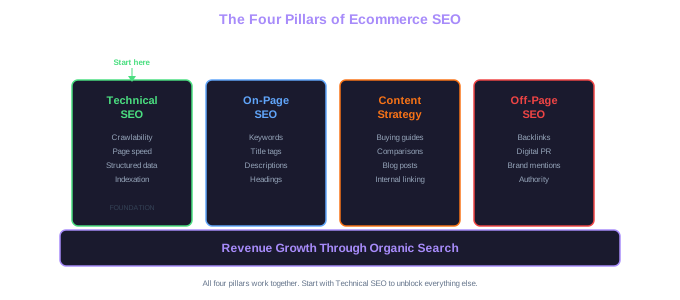
Start with a technical audit before investing in content. We have seen stores publish hundreds of blog posts while their product pages were not even indexed due to crawl issues.
How This Academy Is Structured
This academy walks through ecommerce SEO in the order that matters. We start with how search engines actually work so you understand the mechanics behind every recommendation. Next, we cover keyword research specifically for ecommerce, because finding product and category keywords requires different techniques than blog keyword research.
From there, we move into on-page optimization for the three page types that matter most: product pages, category pages, and supporting content. Technical SEO follows, with practical guidance on site architecture, structured data, and the platform-specific issues Shopify, WooCommerce, and Magento stores face.
The later sections cover content strategy, link building, analytics, and advanced topics like international SEO and JavaScript rendering. Each topic builds on the previous ones, so we recommend going through them in order if you are new to ecommerce SEO.
Setting Realistic SEO Expectations
SEO is not a quick fix. A new ecommerce site typically needs 4 to 8 months of consistent work before seeing meaningful organic traffic growth. Established stores with existing authority can see results faster, sometimes within 6 to 12 weeks for specific pages.
The timeline depends on several factors: your current domain authority, the competitiveness of your market, how many technical issues need fixing, and how much content work is required. A store selling niche handmade ceramics faces very different competition than one selling consumer electronics.
What we can say from working with hundreds of online stores is that SEO consistently delivers the best long-term ROI of any marketing channel for ecommerce. The key is committing to the process and measuring progress through the right metrics. Understanding the ecommerce ranking factors that matter most will help you prioritize your efforts.
Free Tools & Resources
Try our free SEO tools
Work Together With SEO Experts who understand ecommerce
World’s first Ecom-founded SEO agency