Link Building
8 min readEmail Outreach for Links
Email outreach remains the most reliable method for earning high-quality backlinks to ecommerce sites. Unlike passive strategies that depend on content being discovered organically, outreach puts your best pages directly in front of site owners, editors, and bloggers who can link to them. Our [link building](/link-building) service uses these exact techniques at scale. When done well, a single outreach campaign can generate dozens of relevant, authoritative backlinks that move rankings.
In this guide
Prospecting for Link Targets
Effective outreach starts long before you write a single email. The prospecting phase determines the quality and relevance of every link you will earn. Begin by defining your ideal link target: what types of sites would provide the most SEO value and referral traffic for your ecommerce store? Industry blogs, product review sites, resource pages, online magazines, and complementary (non-competing) businesses all make strong prospects.
Use a combination of search operators and backlink tools to build your prospect list. Google operators like "keyword + inurl:resources" or "keyword + write for us" surface pages that are already open to external links. Backlink tools like Ahrefs and Semrush reveal who links to your competitors, giving you a pre-qualified list of sites that link to ecommerce content in your niche.
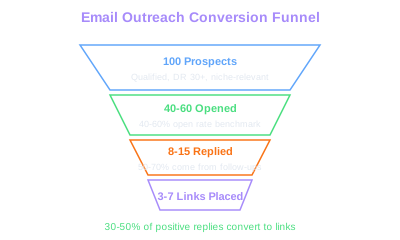
For each prospect, record the domain rating, monthly traffic estimate, topical relevance, contact person, and email address. Aim for a minimum prospect list of 100 targets before launching a campaign. Quality matters more than quantity, ten links from DR 50+ niche-relevant blogs will outperform 100 links from unrelated low-authority sites.
Use Hunter.io or Snov.io to find verified email addresses for your prospects. Generic addresses like info@ or contact@ have significantly lower response rates than personal addresses directed to editors or content managers.
Crafting Effective Outreach Emails
The outreach email is where most link building campaigns succeed or fail. Your email must accomplish three things within the first few seconds: establish relevance, demonstrate value, and make a clear ask. Subject lines should be short, specific, and avoid spammy language, mention the prospect's site name or a specific article to show the email is not mass-produced.
Open with a genuine reference to the prospect's work. This is not flattery for its own sake, it proves you have actually visited their site and understand their audience. One specific sentence about a recent post they published is far more effective than vague praise.
The body of your email should clearly explain what you are offering and why it benefits their audience. If you have a comprehensive buying guide, explain what makes it more complete or current than what they currently link to. If you are suggesting a guest post, pitch a specific topic with a brief outline rather than asking what they need. Close with a single, clear call to action. Asking for too many things in one email reduces response rates. Keep the entire email under 150 words, busy editors will not read essays from strangers.
The 150-Word Rule
Emails under 150 words outperform longer pitches consistently. Lead with value, not with what you want. Editors delete emails that open with 'I would love a link' but respond to emails showing how your content helps their readers.
Personalization at Scale
True personalization is the difference between a 2% response rate and a 15% response rate. However, writing a fully custom email for each of 200 prospects is impractical. The solution is tiered personalization: create template frameworks that allow efficient customization at the points that matter most.
Start by segmenting your prospects into groups based on the type of opportunity, resource page placements, guest posting for ecommerce pitches, broken link building replacements, or editorial mentions. Each group gets a unique template with the core pitch tailored to that link type. Within each template, leave merge fields for the prospect's name, their site name, a specific article reference, and the reason your content fits their audience.
The article reference field is the most important personalization element. Spend 60-90 seconds on each prospect's site finding a recent post you can genuinely reference. This single sentence separates your email from the hundreds of generic outreach messages they receive monthly. Tools like Pitchbox, BuzzStream, or even a well-structured spreadsheet with mail merge can handle the mechanical side of personalization, letting you focus your time on the human touches that drive responses.
Create a swipe file of your best-performing email variations. After every campaign, note which subject lines and opening sentences generated the highest response rates, then iterate on those winners for future campaigns.
Follow-Up Sequences That Convert
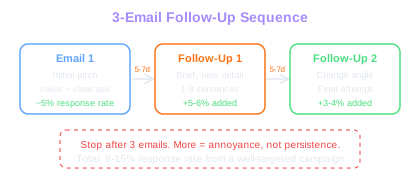
Most link building opportunities are won on the follow-up, not the initial email. Data across the industry consistently shows that 50-70% of positive replies come from follow-up emails rather than the first touch. Yet many outreach campaigns send a single email and give up.
Plan a three-email sequence spaced five to seven business days apart. The first follow-up should be brief, acknowledge that the recipient is busy and restate your value proposition in one sentence. Add a small additional detail you did not include in the original email, such as a specific data point from your content or a mention that you have updated the resource since your last email.
The second follow-up is your final attempt. Change the angle slightly, if your first emails focused on the value of your content, this email might mention that you noticed a specific gap on their page you could help fill. If there is still no response after three emails, mark the prospect as unresponsive and move on. Sending more than three emails crosses from persistence into annoyance and can damage your brand reputation.
Track your follow-up performance separately from initial emails. If your first email gets a 5% response rate but your follow-up sequence pushes total responses to 14%, that data proves the ROI of persistent, respectful follow-up.
Follow-Up ROI
A first email at 5% response rate jumps to 14% total with a proper follow-up sequence. That means 64% of your placed links come from emails 2 and 3, not your initial pitch.
Schedule follow-up emails for Tuesday through Thursday mornings in the recipient's time zone. Monday inboxes are flooded, and Friday emails get buried over the weekend.
Tracking Response Rates and Campaign Metrics
Without tracking, you cannot improve. Every outreach campaign should measure four core metrics: open rate, response rate, link placement rate, and cost per link. Open rate tells you whether your subject lines are working. Response rate measures the effectiveness of your email copy. Link placement rate reveals how many responses actually convert into placed links. Cost per link accounts for your time and any tool subscriptions.
Benchmark your results against industry averages. A well-targeted ecommerce outreach campaign should achieve 40-60% open rates, 8-15% response rates, and convert 30-50% of positive responses into placed links. If your open rate is below 30%, your subject lines need work. If your response rate is below 5%, your emails lack personalization or your prospects are poorly targeted.
Use a CRM or dedicated outreach tool to track the status of every prospect through the pipeline: contacted, opened, replied, link placed, or unresponsive. This pipeline view prevents duplicate outreach and reveals where prospects drop off. After every campaign, analyze which prospect segments, email templates, and follow-up sequences performed best, then apply those lessons to the next campaign.
Common Outreach Mistakes to Avoid
Even experienced link builders fall into patterns that sabotage their results. The most damaging mistake is poor targeting, sending outreach to sites that have no reason to link to your content wastes time and damages your sender reputation. Every prospect on your list should have a clear, logical reason to link to your specific page.
Another frequent error is leading with what you want instead of what you offer. Emails that open with "I would love a link from your site" get deleted immediately. Reframe the conversation around value: what does the prospect's audience gain from your content that they cannot get from what is already linked?
Sending identical emails to multiple contacts at the same organization is a reputation killer. If the editor and the content manager both receive the same template, they will compare notes and blacklist your domain. Research the right contact and send one personalized email.
Finally, neglecting email deliverability is a silent campaign killer. If your domain lacks proper SPF, DKIM, and DMARC records, your emails land in spam folders. Warm up new email accounts gradually, starting with 10-15 emails per day and increasing over two to three weeks. Monitor your bounce rate and remove invalid addresses immediately to protect your sender score.
Run your outreach emails through a spam checker like Mail Tester before launching a campaign. A score below 7 out of 10 means your emails are likely hitting spam filters, and you should fix authentication records and adjust your copy before sending.
Free Tools & Resources
Try our free SEO tools
Work Together With SEO Experts who understand ecommerce
World’s first Ecom-founded SEO agency