Industry Playbooks
12 min readFood & Beverage SEO Playbook
Food and beverage ecommerce faces unique SEO challenges: perishable inventory, strict regulatory claims, recipe-driven discovery, and intense competition from grocery giants and marketplace sellers. Ranking organically requires strategies tailored to how consumers actually search for food products online, by ingredient, dietary need, occasion, and taste profile. A solid [ecommerce SEO](/blog/ecommerce-seo) foundation is essential before applying these vertical-specific tactics. This playbook covers the specific techniques that drive sustainable organic growth for online food and drink stores.
In this guide
Dietary and Ingredient-Based Keyword Strategy
Food shoppers increasingly search by dietary requirement rather than brand or generic product name. Queries like "gluten-free pasta," "keto snack bars," "organic cold-pressed juice," and "vegan protein powder" carry strong commercial intent and convert at high rates. Build your keyword architecture around the dietary attributes and key ingredients your products contain.
Create dedicated category pages for every major dietary segment you serve, gluten-free, keto, vegan, paleo, low-sodium, sugar-free, organic, non-GMO. Each page should include a brief explanation of the dietary standard, your certification or sourcing credentials, and a curated product grid. These pages capture shoppers who filter by need before they consider brand.
Map ingredient-level keywords to individual product pages. A product titled "Raw Manuka Honey UMF 15+ 500g" will outperform "Premium Golden Honey" because shoppers search by specific ingredient, origin, and grade. Include varietal, origin, processing method, and certification in your product titles and descriptions.
Track emerging food trend keywords. Terms like "adaptogenic mushroom blend," "collagen peptides," and "prebiotic soda" can spike rapidly as media coverage and social trends shift consumer interest. Monitor Google Trends, TikTok food communities, and health publication coverage weekly to capture rising demand before competitors establish ranking positions.
Recipe Content and Informational Funnels
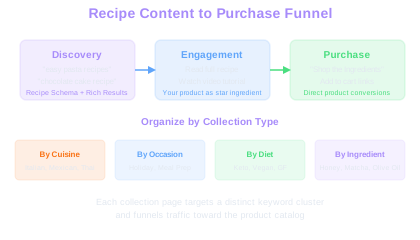
Recipe content is the most powerful top-of-funnel strategy for food ecommerce. Millions of daily searches begin with queries like "easy weeknight dinner recipes" or "chocolate cake from scratch." A well-structured recipe blog that features your products as key ingredients creates a natural path from discovery to purchase. This is a core pillar of content strategy for stores.
Publish recipes that prominently use your products. If you sell specialty olive oil, create recipes where that oil is the star ingredient, not a minor addition. Each recipe page should include a "Shop the Ingredients" section with direct links to the products used, complete with add-to-cart functionality where your platform supports it.
Implement Recipe schema markup on every recipe page. Google displays recipe rich results with images, ratings, cook time, and calorie count directly in search results. Pages with complete Recipe schema see dramatically higher click-through rates than plain blue links. Include all recommended schema fields: name, image, author, datePublished, description, prepTime, cookTime, totalTime, recipeYield, recipeIngredient, recipeInstructions, and nutrition.
Organize recipes into collections that mirror search behavior: by cuisine (Italian, Mexican, Thai), by occasion (holiday entertaining, meal prep, quick lunches), by dietary need (keto recipes, dairy-free baking), and by main ingredient. Each collection page targets a distinct keyword cluster and funnels traffic toward your product catalog.
Repurpose recipe content into video format for YouTube and embed those videos on your recipe pages. Google increasingly surfaces video results for recipe queries, and a video showing your product in action reinforces brand recognition while capturing an additional search channel.
Recipe Schema Impact
Pages with complete Recipe schema (image, ratings, cook time, calories) see dramatically higher click-through rates than plain blue links. Include all recommended fields: prepTime, cookTime, recipeYield, recipeIngredient, recipeInstructions, and nutrition.
Track which recipe pages drive the most add-to-cart events, not just traffic. A recipe page with 5,000 monthly visits and a 3% add-to-cart rate is more valuable than one with 20,000 visits and no conversions. Optimize your internal linking to favor high-converting recipe content.
Product Page Optimization for Food and Drink
Food product pages must address concerns that other ecommerce verticals rarely face: ingredient transparency, allergen information, nutritional data, shelf life, storage instructions, and sourcing provenance. These details are not just compliance requirements, they are the content that search engines and shoppers actively seek.
Structure every product page with a complete ingredient list, nutritional facts panel, allergen warnings, and certifications (organic, fair trade, kosher, halal). Present this information in crawlable HTML text, not locked inside images. Google cannot read text embedded in a JPEG photo of a nutrition label.
Write product descriptions that go beyond listing features. Describe the flavor profile, suggest pairings or use cases, and explain what makes the product distinct, single-origin sourcing, small-batch production, traditional fermentation methods. This unique descriptive content differentiates your pages from competitors selling identical or similar products.
Implement Product schema with all food-relevant properties: name, brand, sku, gtin, description, image, offers (price, availability, priceCurrency), nutrition (calories, servingSize), and aggregateRating. Include the weight or volume in the product name to match how shoppers search: "Organic Matcha Powder 100g" rather than just "Organic Matcha Powder."
Add a prominent "Best Before" or freshness guarantee statement to build trust. Food shoppers hesitate to buy perishables online unless they are confident about freshness. Displaying your fulfillment speed and freshness policies directly on the product page reduces bounce rates and increases conversion.
Seasonal and Occasion-Based SEO Calendar
Food ecommerce is deeply seasonal. Demand patterns are driven by holidays, cultural celebrations, harvest cycles, and even weather. A well-planned SEO calendar ensures your pages are indexed and ranking before each demand spike rather than scrambling to catch up.
Map your product catalog to a full-year seasonal calendar. Christmas hampers, Easter chocolates, Thanksgiving turkeys, Valentine's Day gift boxes, summer barbecue supplies, Ramadan food packages, Diwali sweets, each occasion represents a distinct keyword cluster with predictable search volume spikes. Create or refresh dedicated landing pages at least 8-10 weeks before each event.
Retain seasonal URLs year over year. A page at /christmas-food-hampers that has three years of backlink history and ranking signals will vastly outperform a newly created page. Update the product selection, imagery, and year references, but keep the URL and core content structure intact.
Capitalize on weather-driven search patterns. Searches for "hot chocolate gift set" spike when temperatures drop; "cold brew coffee" peaks in spring and summer. Monitor weather forecasts alongside your analytics to time content refreshes and promotional pushes.
Create gift guide content for every major gifting occasion. "Best food gifts for foodies," "corporate gift baskets," "housewarming food gifts", these queries carry high commercial intent and naturally lend themselves to curated product collections. Include price range filters and personalization options to capture long-tail variations like "food gifts under 50 dollars" or "personalized wine gifts."
Weather-Driven Search
Searches for "hot chocolate gift set" spike when temperatures drop; "cold brew coffee" peaks in spring and summer. Monitor weather forecasts alongside analytics to time content refreshes and promotional pushes for maximum organic visibility.
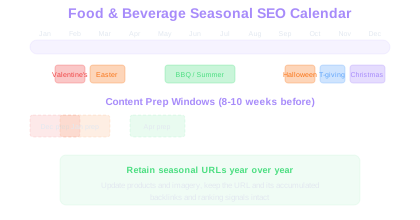
Start indexing holiday landing pages in September for Christmas, January for Valentine's Day, and February for Easter. Google needs time to discover, crawl, and rank these pages. Last-minute page creation means you are competing on paid search alone during peak demand.
Local SEO and Fulfillment-Aware Optimization
Food ecommerce sits at the intersection of online retail and local fulfillment. Many food brands offer local delivery, farm-to-door service, or click-and-collect options alongside nationwide shipping. Your SEO strategy should capture location-specific demand where it exists.
If you serve specific delivery zones, create location-targeted landing pages. A page optimized for "organic grocery delivery London" or "meal kit delivery Austin" captures shoppers who include location in their search. Include your delivery area, estimated delivery times, and minimum order thresholds on these pages.
Claim and optimize your Google Business Profile if you have a physical presence, a storefront, warehouse with pickup, or farmers market stall. Food businesses with a GBP listing appear in local pack results and Google Maps, which can drive significant order volume for local delivery operations.
Implement LocalBusiness or FoodEstablishment schema markup on your site to reinforce your local presence with search engines. Include your address, delivery areas (areaServed), opening hours, and accepted payment methods.
For subscription box and recurring delivery models, target keywords that reflect the subscription intent: "weekly vegetable box delivery," "monthly coffee subscription," "artisan cheese subscription UK." These queries indicate a customer willing to commit to ongoing purchases, the highest lifetime value segment in food ecommerce.
Partner with local food bloggers and regional publications for backlinks. A feature in a local food guide or a "best of" city roundup carries strong local relevance signals and drives qualified traffic from your target delivery area.
Trust Signals, Compliance, and YMYL Considerations
Food falls squarely into Google's YMYL (Your Money or Your Life) category. Health claims, nutritional advice, and food safety information are held to elevated quality standards by Google's ranking systems. Sites that fail to demonstrate expertise, experience, authoritativeness, and trustworthiness (E-E-A-T) will struggle to rank for competitive food-related queries.
Display all relevant certifications prominently: organic certification bodies, food safety standards (HACCP, BRC, SQF), allergen management credentials, and industry association memberships. Link to your certificates or accreditation pages where possible. These trust signals matter to both Google's quality evaluators and to shoppers making purchasing decisions.
Publish an "About Our Sourcing" or "Our Story" page that details your supply chain, farming partners, quality control processes, and company history. Google's quality raters specifically look for background information about who runs a site and their expertise in the field.
Be scrupulously careful with health claims. Statements like "cures inflammation" or "prevents heart disease" can trigger regulatory issues and erode trust with Google's YMYL algorithms. Use compliant language: "may support joint health" with proper disclaimers, or link to published peer-reviewed research when referencing health benefits.
Encourage and display customer reviews prominently. Implement Review and AggregateRating schema markup on product pages. For food products, reviews that mention taste, freshness on arrival, packaging quality, and accurate description are particularly valuable, they address the core anxieties of online food shoppers who cannot see, smell, or taste before buying.
Maintain a clear returns and refund policy for food products. Outline your process for handling items that arrive damaged, spoiled, or not as described. This policy page builds trust and can rank for brand-name queries paired with "returns" or "refund policy."
Audit your site for unsupported health claims at least quarterly. A single product page claiming a food "cures" or "treats" a medical condition can damage your entire domain's trustworthiness in Google's YMYL evaluation. Replace absolute claims with evidence-backed, regulatory-compliant language.
Free Tools & Resources
Try our free SEO tools
Work Together With SEO Experts who understand ecommerce
World’s first Ecom-founded SEO agency