On-Page SEO
8 min readEcommerce Blog SEO
Most ecommerce stores rely entirely on product and category pages to drive organic traffic, missing the massive opportunity that a well-optimized blog provides. A strategic ecommerce blog captures informational search queries that product pages cannot rank for, builds topical authority that strengthens your entire domain, and creates natural pathways from educational content to purchase decisions, turning readers into customers at every stage of the buying journey. A blog is a core pillar of any [content marketing](/content-writing) strategy for ecommerce.
In this guide
Why Ecommerce Stores Need a Blog
Product and category pages target transactional and commercial search intent, but they miss the enormous volume of informational queries that potential customers search before they are ready to buy. A shopper researching "how to choose a mattress for back pain" is not ready to purchase yet, but they represent a high-value prospect who will buy once they have the information they need. Without a blog, you lose this traffic entirely to competitors and content sites.
A blog also solves the topical authority problem that pure ecommerce sites face. Google increasingly rewards domains that demonstrate comprehensive expertise in their niche. A mattress store with 200 product pages but zero educational content signals narrow commercial intent. The same store with 50 well-researched blog posts about sleep health, mattress materials, and bedroom ergonomics signals deep expertise — what we call topical authority — that lifts rankings across the entire site.
From a link building perspective, blogs are dramatically easier to earn links to than product pages. Journalists, bloggers, and resource page curators rarely link to commercial product listings, but they readily link to useful guides, original research, and expert analysis. Your blog becomes the primary link magnet for your domain, and those links flow equity to your product pages through internal linking.
Audit your top 50 target keywords and classify them by search intent. You will likely find that 40-60% have informational intent that only blog content can effectively target. This gap represents your blog's addressable traffic opportunity.
Content That Drives Product Discovery
Not all blog content is equal for ecommerce. The highest-value blog posts are those that naturally lead readers toward your products without feeling like advertisements. The key is to write content that answers genuine questions your target customers ask during their research phase, where your products are the logical solution.
Buying guides are the cornerstone of ecommerce blog strategy. "How to Choose the Right [Product Category]" posts target high-intent informational queries from shoppers actively evaluating options. These guides should cover selection criteria, common mistakes, price-to-quality considerations, and use-case recommendations, with natural references to your products as examples throughout the guide.
Problem-solution content converts exceptionally well. Posts like "How to Fix [Problem Your Product Solves]" attract readers who have an active need and are searching for solutions. When your content demonstrates expertise in solving the problem and naturally introduces your product as one of the solutions, the path from reader to customer is short and organic.
Buying guides and comparisons capture commercial-intent traffic at the decision stage. Posts comparing product types, materials, brands, or approaches help readers narrow their choices. "Memory Foam vs. Latex Mattresses: Which Is Better for Side Sleepers?" captures a reader who is very close to purchasing and needs one final piece of information to decide.
Seasonal and trend content provides traffic spikes and freshness signals. "Best [Product Category] for [Season/Event]" posts align with seasonal search patterns and can be updated annually to maintain rankings.
Content Mix Impact
Buying guides convert at 2-3x the rate of general blog posts because they attract readers already evaluating options. Problem-solution posts rank faster due to lower keyword competition and clear search intent alignment.
Internal Linking from Blog to Products
Internal linking is where your blog's SEO value translates into product page rankings and revenue. Without strategic internal links, your blog posts accumulate authority and traffic in isolation, never passing that value to the commercial pages that generate sales.
Every blog post should contain two to four contextual links to relevant product or category pages. These links must appear naturally within the content, forced product plugs disrupt the reading experience and reduce the editorial credibility that makes blog content effective. The best internal links appear at decision points within the article, where the reader has just learned something that makes a product relevant.
Use descriptive anchor text for internal links rather than generic phrases like "click here" or "check it out." Anchor text like "our collection of organic cotton sheets" or "see our full range of professional kitchen knives" provides both user context and keyword relevance signals to search engines.
Create a hub-and-spoke internal linking structure. Your category pages serve as hubs, and your blog posts serve as spokes that link back to the hub. A category page for running shoes should have 10-15 blog posts about running technique, shoe selection, injury prevention, and race preparation all linking to it. This structure concentrates topical authority on your most important commercial pages.
Implement contextual product callouts within blog posts. These are styled blocks within the article that highlight a specific product relevant to the section being discussed. They differ from banner ads because they are editorially integrated, appearing at a point where the reader would naturally want to see a product recommendation.
Linking Benchmark
Every category page should have at least 10-15 blog posts linking to it. Each blog post should contain 2-4 contextual links to relevant product or category pages using descriptive anchor text.
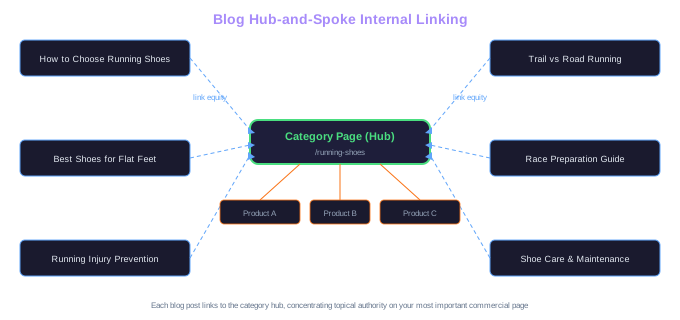
Create an internal linking map that shows which blog posts link to which product and category pages. Review this map monthly to ensure every commercial page has at least five blog posts linking to it. Identify orphaned blog posts with no internal links and fix them immediately.
Blog Post Structure for Ecommerce SEO
Blog post structure directly impacts both rankings and conversion rates. Ecommerce blog posts need to satisfy search intent quickly, establish credibility through expert content, and guide readers toward products without disrupting the informational experience.
Start every post with a concise introduction that addresses the reader's search intent within the first 100 words. If someone searches "how to clean leather boots," your opening paragraph should confirm they will find step-by-step cleaning instructions, not a lengthy preamble about the history of leather craftsmanship. This alignment between search intent and opening content reduces bounce rates and improves dwell time.
Use a clear heading hierarchy that reflects the logical flow of information. H2 headings should represent the major sections of the post, and H3 headings should break those sections into specific subtopics. This hierarchy helps both readers and search engines understand the content structure. Include your target keyword naturally in the H1 title and at least one H2 heading.
Format for scannability. Ecommerce blog readers are typically in research mode, comparing information across multiple sources. Use short paragraphs (three to four sentences maximum), bulleted lists for key points, bold text for important terms, and summary boxes for key takeaways. These formatting elements reduce cognitive load and keep readers engaged.
Include schema markup appropriate to the content type. HowTo schema for instructional posts, FAQ schema for posts that answer common questions, and Article schema with author information for all blog posts. Rich results from schema markup increase click-through rates from search results by 20-30%.
Study the top five ranking posts for each target keyword before writing. Note their word count, heading structure, content depth, and the types of media they include. Your post should match or exceed the quality and comprehensiveness of the current top results.
Measuring Blog ROI for Ecommerce
Ecommerce blog ROI is not measured in direct blog post conversions alone. The blog's value extends across assisted conversions, organic traffic growth, keyword ranking improvements, link acquisition, and brand visibility. Measuring only last-click blog revenue dramatically understates the true impact.
Set up assisted conversion tracking in Google Analytics. Most blog-driven purchases follow a multi-touch path: the customer reads a blog post, leaves, returns later through a branded search or direct visit, and then purchases. Assisted conversion data shows how often blog posts appear in conversion paths even when they are not the last click. Many ecommerce blogs influence 15-25% of all organic revenue through assisted conversions.
Track blog-specific metrics monthly: organic sessions to blog content, average position improvements for target keywords, new referring domains earned through blog content, internal link click-through rates from blog posts to product pages, and the revenue attributed to blog-assisted conversion paths.
Calculate cost per blog-driven acquisition. Sum all blog costs (writing, editing, graphics, promotion) over a quarter and divide by the number of conversions the blog assisted during that period. Compare this cost to your paid acquisition costs. Most mature ecommerce blogs deliver customer acquisition costs 50-70% lower than paid search, making them one of the most efficient long-term marketing investments.
Measure content decay and refresh ROI. Blog posts typically peak in traffic six to twelve months after publication and then gradually decline. Track which posts are losing traffic and refresh them with updated information, new sections, and improved internal links. A well-maintained blog post can sustain rankings for three to five years, dramatically improving the lifetime ROI of content creation.
Create a blog content scorecard that tracks the performance of every post against four metrics: organic traffic, keyword rankings, backlinks earned, and assisted conversions. Review this scorecard quarterly to identify which content types deliver the highest ROI and allocate future resources accordingly.
Free Tools & Resources
Try our free SEO tools
Work Together With SEO Experts who understand ecommerce
World’s first Ecom-founded SEO agency