Link Building
12 min readDigital PR for Ecommerce
Digital PR combines traditional public relations tactics with SEO objectives to earn high-authority backlinks from news sites, industry publications, and major blogs. For ecommerce stores, digital PR is one of the most scalable ways to [build links](/link-building) that move rankings, a single successful campaign can generate dozens of links from domains with authority scores that would take years to earn through conventional outreach. This guide covers how to plan, execute, and measure digital PR campaigns designed specifically for online retailers.
In this guide
What Digital PR Means for Ecommerce
Digital PR for ecommerce is the practice of creating newsworthy stories, data assets, or campaigns that earn coverage, and links, from journalists, bloggers, and online publications. Unlike traditional PR, which measures success in brand mentions and media impressions, digital PR is evaluated primarily by the backlinks each campaign generates. Every piece of coverage that includes a link to your store transfers authority that improves your organic search rankings.
The approach differs from standard link building because it targets editorial links, the most valuable type of backlink. When a journalist at a national newspaper links to your store's research study or product page within an article, that link carries significantly more weight than a guest post link or a directory listing. Editorial links from high-authority publications are also the hardest for competitors to replicate, creating a durable ranking advantage. Understanding backlink fundamentals for ecommerce helps you evaluate the quality of links each campaign generates.
Ecommerce stores have natural advantages in digital PR that many fail to exploit. You sit on proprietary sales data that reveals consumer trends. You have access to product expertise that journalists need for buying guides and roundups. You serve specific customer communities whose stories resonate with niche publications. The key is repackaging these assets into formats that journalists find irresistible: data studies, expert commentary, product innovations, and community-driven stories.
Scale Advantage
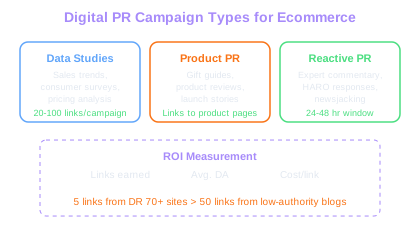
A single successful digital PR campaign can generate 20-100 backlinks from high-authority publications. These editorial links are nearly impossible for competitors to replicate, creating a durable ranking advantage.
Data-Driven PR Campaigns
Data-driven campaigns are the most reliable way for ecommerce stores to earn high-authority links at scale. Journalists need data to support their stories, and if your store can provide original, interesting data, you become a source that publications link back to repeatedly.
Start with your own sales and customer data. Analyze purchasing trends by region, season, demographic, or product category. A pet supply store might analyze which dog breeds are most popular in different cities based on purchase data. A fashion retailer could publish a report on how color preferences shift by season. These data stories are inherently newsworthy because they reveal genuine consumer behavior that no one else can access.
If your proprietary data is limited, create original research through surveys. Commission a survey of 1,000 to 2,000 consumers on a topic relevant to your industry. A mattress retailer might survey sleep habits across different age groups. A kitchen equipment store could survey home cooking trends post-pandemic. Professional survey platforms like Pollfish or SurveyMonkey Audience provide statistically significant sample sizes at reasonable costs.
Present your data in a visually compelling format. Create charts, infographics, and interactive data visualizations that journalists can embed or reference in their articles. A well-designed data asset is far more likely to earn links than a plain text press release. Host the full study on a dedicated page on your site, this is the URL you want publications to link to, and it should be optimized for the keywords you want to rank for.
Data You Already Have
Your sales data reveals consumer trends no one else can access. A pet store analyzing breed popularity by city or a fashion retailer tracking seasonal color preferences creates inherently newsworthy stories that earn links from outlets that would never link to a product page.
Time your data campaigns to align with seasonal news cycles. A study about holiday shopping trends released in early November will get far more coverage than the same study released in March. Map out the editorial calendar of your target publications and pitch data stories 4-6 weeks before their relevant season.
Building a Media List and Pitching Journalists
A targeted media list is the foundation of every digital PR campaign. Generic mass pitches to thousands of journalists produce dismal response rates. Instead, build a curated list of 50-150 journalists who specifically cover your industry, product category, or the topic of your campaign.
Use tools like Cision, Muck Rack, or even Twitter/X search to find journalists who have recently written about topics related to your pitch. Look at who covered similar studies or stories from your competitors. Read their recent articles to understand their beat, preferred story angles, and the types of sources they cite. This research allows you to personalize each pitch in a way that demonstrates genuine familiarity with their work.
Craft a pitch email that leads with the most newsworthy finding from your campaign. Journalists receive hundreds of pitches daily, so your subject line and opening sentence must convey value immediately. State the key data point or story angle in the first two sentences, then explain why it matters to their audience. Include a link to the full study or asset on your site. Keep the entire pitch under 200 words, anything longer gets skimmed or ignored.
Follow up exactly once, three to five business days after your initial pitch. Reference the original email and add one new angle or data point to give them a fresh reason to consider the story. Never follow up more than once, persistent follow-ups damage your reputation with journalists and reduce response rates for future campaigns. Track your pitches in a CRM or spreadsheet to monitor open rates, responses, and resulting coverage.
Product-Led PR Strategies
Product-led PR leverages your inventory as a story generator. New product launches, innovative designs, sustainability initiatives, and notable collaborations all provide angles that journalists and bloggers want to cover. The key is framing product stories in a way that serves the publication's audience rather than reading like a product advertisement.
Seasonal gift guides are the most accessible product-led PR opportunity for ecommerce stores. Publications across every niche produce gift guide content starting in September, and they actively seek product recommendations. Pitch your products for inclusion by providing high-resolution images, key specifications, pricing, and a clear explanation of why each product is a standout choice for a specific recipient type. Gift guide links are particularly valuable because they point directly to product pages with purchase intent.
Product comparison and review pitches work well when you have a genuinely differentiated product. If your product has won awards, solves a unique problem, or significantly outperforms competitors on a specific metric, pitch it to publications that review products in your category. Provide a review sample and let the journalist form their own opinion, authentic editorial reviews carry far more weight than paid placements.
Sustainability and social impact stories have become increasingly powerful PR angles. If your products use recycled materials, your supply chain has achieved specific certifications, or your store donates a percentage of sales to relevant causes, these stories resonate with journalists and audiences alike. Be specific and verifiable with your claims, greenwashing backlash can be more damaging than no PR at all.
Create a dedicated press page on your site with downloadable product images, founder bios, fact sheets, and brand guidelines. Journalists working on deadline will use whatever assets are readily available. A well-organized press page removes friction from coverage and increases the likelihood of earning links.
Reactive PR and Newsjacking
Reactive PR involves responding to breaking news and trending topics with expert commentary, relevant data, or unique perspectives from your store. When done well, reactive PR can earn links from major publications within hours rather than the weeks required for proactive campaigns.
Set up Google Alerts and social media monitoring for keywords related to your industry. When a relevant story breaks, assess whether your store can add genuine value to the conversation. A home security retailer might offer expert commentary when burglary statistics are released. A fitness equipment store could provide insights when a new health study trends on social media. Speed is critical, most reactive PR opportunities have a 24-48 hour window before the story cycle moves on.
Build relationships with journalists in advance so they think of you as a go-to source when stories break. Offer yourself as a standing expert source in your product category. Platforms like HARO (Help A Reporter Out), Qwoted, and Quoted allow you to respond to journalist queries in real time. Consistently providing helpful, quotable responses builds your reputation as a reliable source.
Prepare template responses for predictable news events in your industry. If you sell outdoor gear, have commentary templates ready for the start of hiking season, extreme weather events, and annual recreation reports. These templates can be customized and sent within minutes of a story breaking, dramatically increasing your chances of being included in coverage.
Measuring Digital PR ROI
Digital PR ROI should be measured through SEO metrics, not just coverage volume. The primary metric is the number and quality of backlinks earned per campaign. Track the number of linking domains, their domain authority scores, and whether the links are dofollow or nofollow. A campaign that earns five links from domains with authority scores above 70 is more valuable than one that earns 50 links from low-authority blogs.
Track the ranking impact of your digital PR campaigns by monitoring keyword positions for the pages that earned links. Use a rank tracking tool to measure positions before the campaign launches and at weekly intervals afterward. Most successful campaigns produce measurable ranking improvements within two to six weeks as Google processes the new backlinks.
Calculate cost-per-link by dividing the total campaign cost (including content creation, outreach time, and any paid tools or services) by the number of quality links earned. Benchmark this against other link building methods. Digital PR campaigns typically cost more per campaign but often deliver a lower cost-per-link when they succeed, because a single campaign can generate 20 to 100 or more links.
Measure referral traffic from earned coverage to quantify the direct traffic value beyond SEO. Some publications send significant referral traffic that converts at higher rates than organic search traffic because readers arrive with context and trust established by the publication's endorsement. Track referral traffic in GA4, segmented by publication, to identify your highest-value media relationships for future campaigns.
Build a digital PR scorecard that tracks links earned, average domain authority of linking sites, keyword ranking changes, referral traffic, and cost-per-link for every campaign. Over time, this scorecard reveals which campaign types deliver the best ROI for your specific industry and helps you double down on winning formats.
Free Tools & Resources
Work Together With SEO Experts who understand ecommerce
World’s first Ecom-founded SEO agency